
As part of our 50th anniversary celebrations, the library is introducing a new “50 for 50” blog series for 2026 where, by the end of the year, we will have introduced fifty titles that we recommend reading for learning about and celebrating Pueblo culture. Read ahead to learn about a selection of books in the IPCC Library collections that span genres, ages, and perspectives.
For fifty years, the IPCC has been a place where stories are honored, protected, and shared with intention. Several of the titles selected for this post were specifically chosen to highlight the accomplishments and contributions of many significant Pueblo women who nurtured their communities through their art, leadership, and service. Each book offers the reader a chance to reflect on how deep compassion, fierce resilience, and unwavering commitment have nurtured others to grow, overcome obstacles, thrive, and serve as a wonderful guide as we celebrate our anniversary and look ahead to the future. Find them at the IPCC library or your favorite bookstore.
Journeys and Pathways: Contemporary Pueblo Women in Leadership, Service, and the Arts
Indian Pueblo Cultural Center, 2021
We start this summer's selection of books with Journeys and Pathways, an inspiring oral history project funded by a grant from the National Endowment for the Humanities focused on collecting the stories and experiences of contemporary Pueblo women. Young professional Pueblo women from a variety of fields were interviewed to highlight how they have each achieved extraordinary goals while maintaining strong connections to their communities, cultures and traditions. Of particular interest are the reflections provided by the women interviewed about the mentorship and guidance they received from others over the course of their careers.

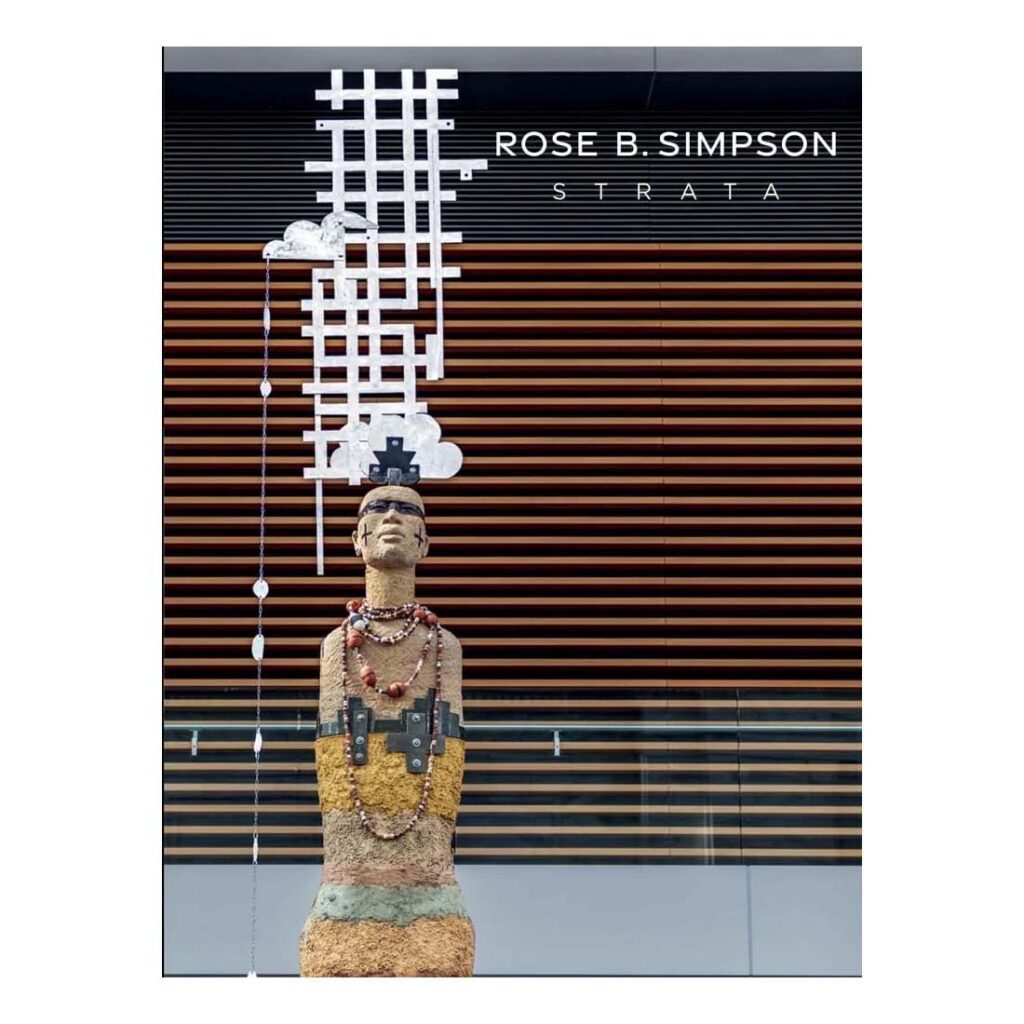
Rose B. Simpson: Strata
Nadiah Rivera Fellah (Santa Clara), 2024
This richly illustrated volume was published after Simpson’s commission of a 26-foot-tall sculpture made of steel, clay, and pumice concrete was installed at the Cleveland Museum of Art. Color photographs, essays, and a conversation with the artist “contextualize Simpson’s work in terms of the history of art, Indigenous feminisms, and Native American art in general.” (Yale University Press) Simpson was recently chosen by the International Women’s Forum of New Mexico as one of eight living legends through the Historic Women Marker Program. This book is a wonderful exploration of Simpson’s latest art and process.
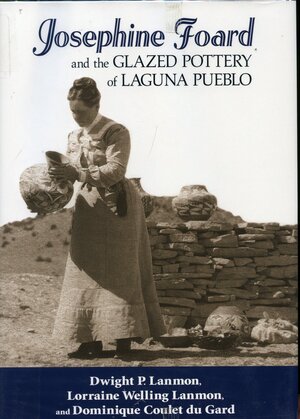
Josephine Foard and the Glazed Pottery of Laguna Pueblo
Dwight P. Lanmon, 2007
This fascinating book recounts the life of Josephine Foard, who, at the age of 56, left Boston in 1899 as a “field matron” for the Bureau of Indian Affairs (BIA) and traveled to Laguna Pueblo to build her own house and a kiln for firing pottery. Field matrons were mostly white, middle-class women who were hired by the federal government to assimilate Indigenous communities into the economy and culture of the United States. Foard’s goal was to make pottery waterproof to increase its marketability as housewares to buyers and, in turn, increase profits for Laguna potters. Foard’s efforts were met with resistance and largely rejected; however, pottery influenced by Foard’s efforts can still be found today. Told through much of Foard’s own personal journals and correspondence, this book provides a glimpse into the life of an intriguing woman who ventured to the Southwest as an artist, potter, and entrepreneur.
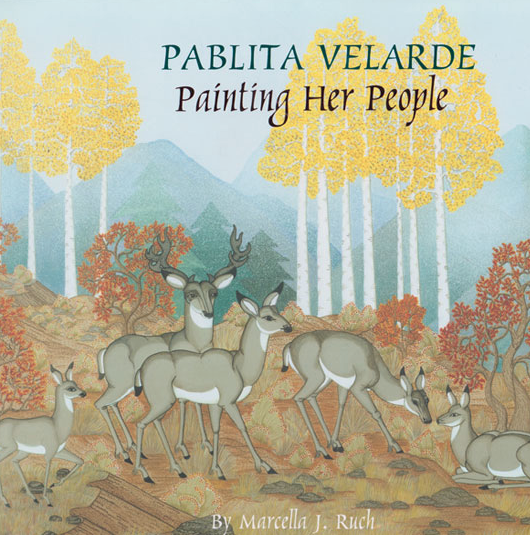
Pablita Velarde: Painting Her People
Marcella J. Ruch, 2001
Told through first-person reminiscences and interviews with the author, this gorgeous art book includes 28 paintings in full color created by Pablita Velarde. With Pablita’s guidance, Ruch has written an engaging retelling of Pablita’s life and memories, including her time at St. Catherine Indian School, her work with the Works Progress Administration (WPA) program, and her experiences while authoring her own children’s book.
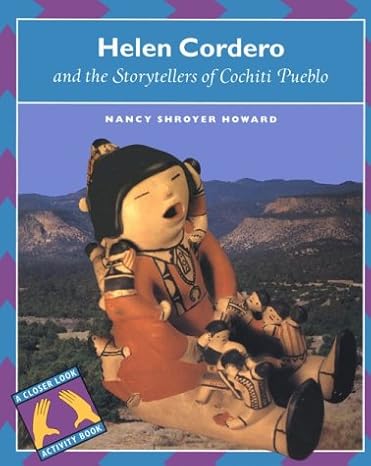
Helen Cordero and the Storytellers of Cochiti Pueblo
Nancy Shroyer Howard, 1995
Helen Cordero is best known for her exceptional clay Storytellers, figures of mothers, fathers, grandmothers, and grandfathers surrounded by a lively audience of children and pets. In this youth-oriented book, readers learn more about Helen and other artists from Cochiti Pueblo. Color photos, activity suggestions, and stories from Cochiti are included and are sure to delight readers young and old alike.
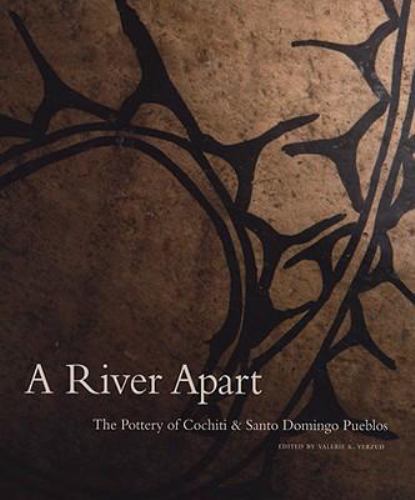
A River Apart: The Pottery of Cochiti & Santo Domingo Pueblos
Valerie K. Verzuh, 2008
Between 1800 and 1850, the ceramic traditions of the Pueblos of Cochiti and Santo Domingo were very similar, almost indistinguishable. The introduction of outsiders through the opening of the Santa Fe Trail, the incorporation of New Mexico as a territory, and the impact of the transcontinental railroad would shape the future trajectory of the pottery traditions of both Pueblos. This large-format volume is composed of seven essays that explore this topic from a variety of perspectives: artistic, anthropological, historical, cultural, curatorial, and personal, and is richly illustrated in color and historic black-and-white photos.
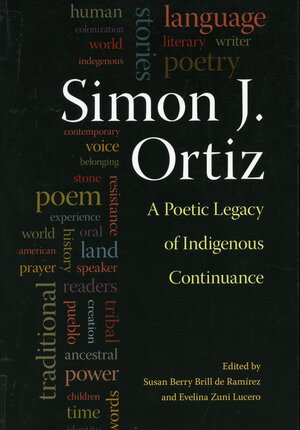
Simon Ortiz: A Poetic Legacy of Indigenous Continuance
Berry Brill de Ramirez, 2009
Simon J. Ortiz is a poet and author of fiction, nonfiction, and children’s literature, and is widely considered to be a literary giant of the twenty-first century. This edited volume brings together a collection of Simon’s own writing as well as interviews and short essays with other Native writers and scholars to shine a spotlight on the depth and range of Ortiz’scontributions to contemporary Native American literature and literacy scholarship.
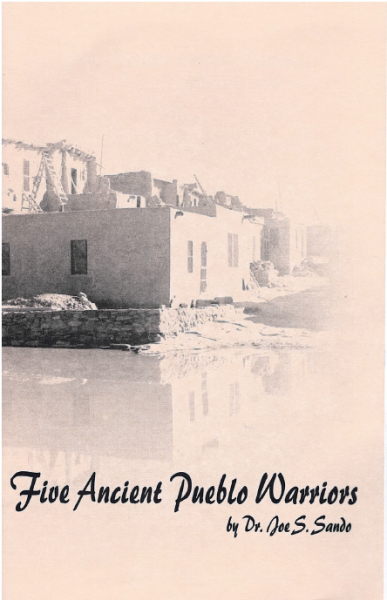
Five Ancient Pueblo Warriors
Joe Sando, 2009
This short but informative booklet details the lives of four Pueblo men who continued working toward greater understanding between Pueblo communities and newcomers after the Pueblo Revolt of 1680 against Spanish colonization. The revolt was led by Popay, a revered Tewa religious leader from Ohkay Owingeh, formerly known as San Juan Pueblo. At great personal risk, each of these men supported Popay’s efforts in his own way. Sando hoped this brief introduction would spark readers’ interest and encourage them to seek out additional books to read.
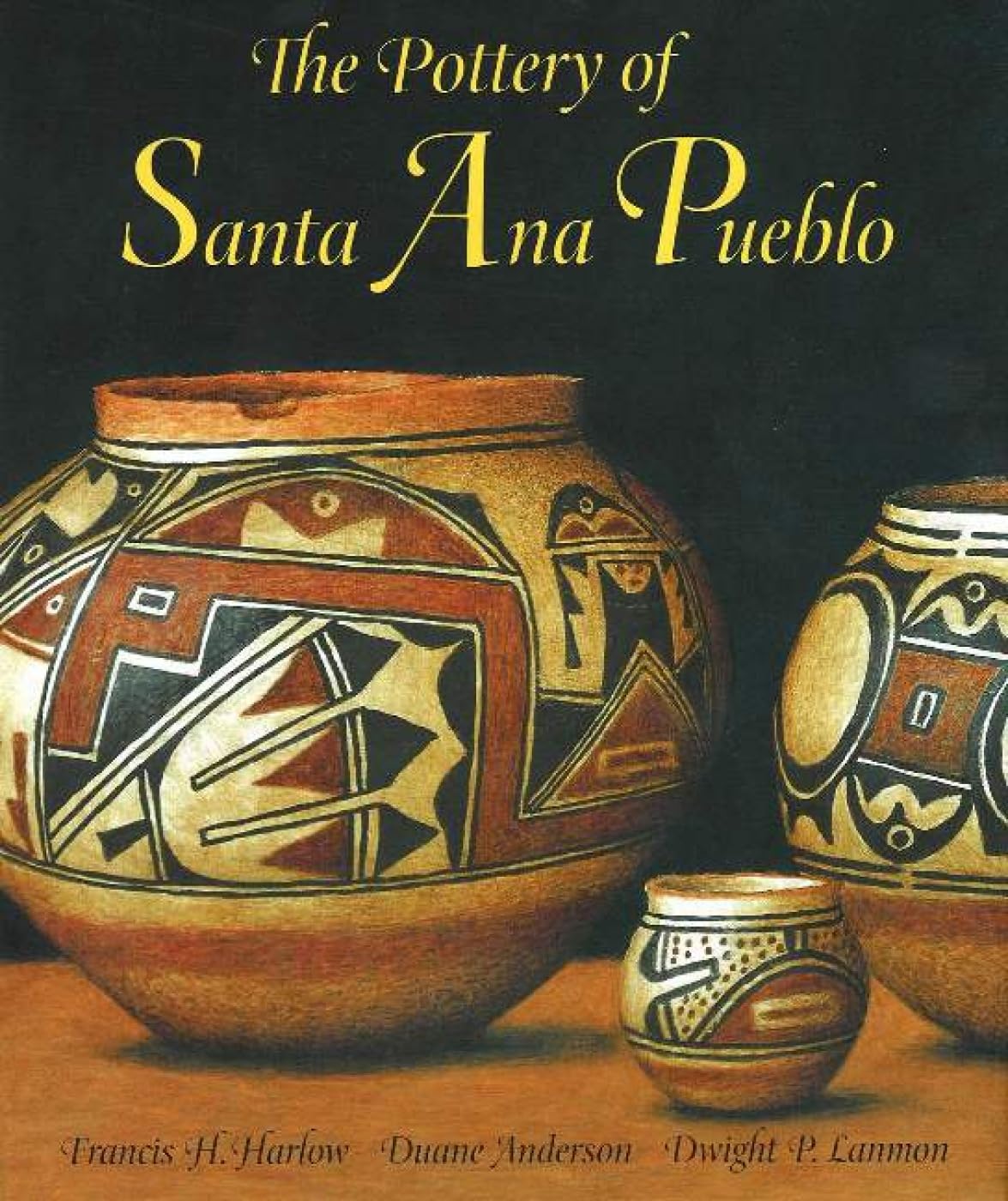
The Pottery of Santa Ana Pueblo
Dwight P. Lanmon, (2005)
Given the name Santa Ana by the Spanish in the 1600s, the Pueblo of Tamaya has been making distinctive pottery for domestic and ritual use for centuries. This book explores the evolution of the pottery styles made at Santa Ana and compares these styles with those found elsewhere in other Pueblo ceramic traditions. This visual study examines the chronological sequence of pottery design and studies the progression of forms and designs used starting with evidence from as early as 1760 and progressing to the present day.
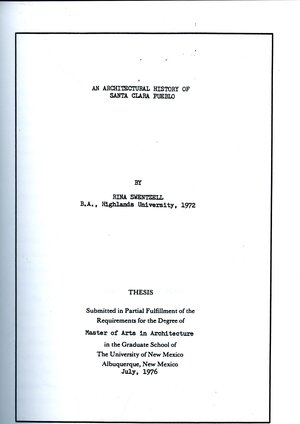
An Architectural History of Santa Clara Pueblo
Rina Swentzell, (1976)
Rina Swentzell of Santa Clara Pueblo was an author, potter, teacher, lecturer, historian, and architect. Considered a preeminent expert in Pueblo art and architecture, Swentzell worked with many prominent universities and museums,including the Institute of American Indian Arts (Santa Fe), the Smithsonian, and Yale. This thesis, written by Swentzell while fulfilling the partial requirements for a Master’s in Architecture from the University of New Mexico, explores how architecture can be influenced by societal change, both positive and negative, and what that means for Pueblo communities and traditions going forward as they plan for future development
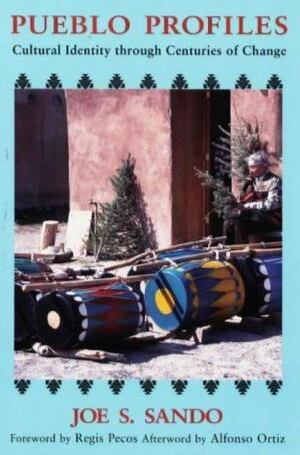
Pueblo Profiles: Cultural Identity Through Centuries of Change
Joe Sando, (1998)
Born and raised at Jemez Pueblo, Joe Sando is a recognized authority and respected writer on Pueblo history. In this book,Sando has compiled the stories of political leaders, educators, and artists who have helped shape Pueblo life from the time of the Pueblo Revolt to the present day. Sando shared that he hoped books such as this would be used to help provide a more balanced and just account of the Indigenous perspective on history and could provide historical reasons why Pueblos have successfully continued to maintain their cultural traditions, which have been lost to many other tribal communities.
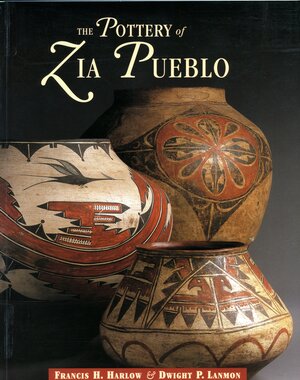
The Pottery of Zia Pueblo
Francis H. Harlow, 2003
More than 600 years old, Zia Pueblo sits atop a small, volcanic, lava-capped mesa in north-central New Mexico. This illustrated book features pottery made at the Pueblo over a span of 300 years and offers an exceptional overview of Zia’s long and complex ceramic history. In addition to discussing techniques for dating pottery, the book explores the forms, major motifs, and designs found in Zia pottery, including the well-known Zia birds and rainbow arcs. Most notable is its information on more than 40 Zia potters, including Trinidad Gachupin Medina and Reyes Ansela Shije Herrera, who lived and worked in the 20th century. With biographical information, color photographs, and historic black-and-white images, this book is a comprehensive resource for better understanding Zia’s thriving potting tradition
As we mark fifty years, we invite you to read alongside us, reflect with us, and engage with these stories in meaningful ways.Please visit our blog next week as we begin a new weekly series highlighting a "Book of the Week" chosen in honor of the Indian Pueblo Cultural Center's anniversary. These titles, as well as many other wonderful books, are available to read in the IPCC Library, currently open Tuesday–Saturday, 9 a.m.–5 p.m. Whether you join our Summer Book Club, share a favorite passage, or simply spend time listening, your presence is part of how these stories continue.