
Happy 50th Anniversary, Indian Pueblo Cultural Center!
Anniversaries and birthdays are natural markers of time. Birthday cards, photo booth strips, and invitations from celebrations past help us pause. These pieces of ephemera ask us to stop, reflect, and consider all that has come before. With the Indian Pueblo Cultural Center’s anniversary celebration taking place this weekend, the IPCC Library is continuing the celebration by highlighting another physical piece of our shared history from the Special Collection.
The Library at the Indian Pueblo Cultural Center has been housed in several locations on the lower level of IPCC. What began, alongside the museum in a small office near the boiler on the building’s north side, gradually expanded and relocated to the south end of the lower level before finally arriving at its current location.
These shifts in the library’s location offer a modest but meaningful record of change and growth the Cultural Center has experienced over the past 50 years. This is why today’s spotlight item is a perfect example of why ephemera are an important part of a Special Collection Library’s catalog and how they can help provide context and fill in the gaps when looking at the past.
Yesterday and Today: Seven Centuries of American Indian History at the Indian Pueblo Cultural Center
Published by The Indian Pueblo Cultural Center
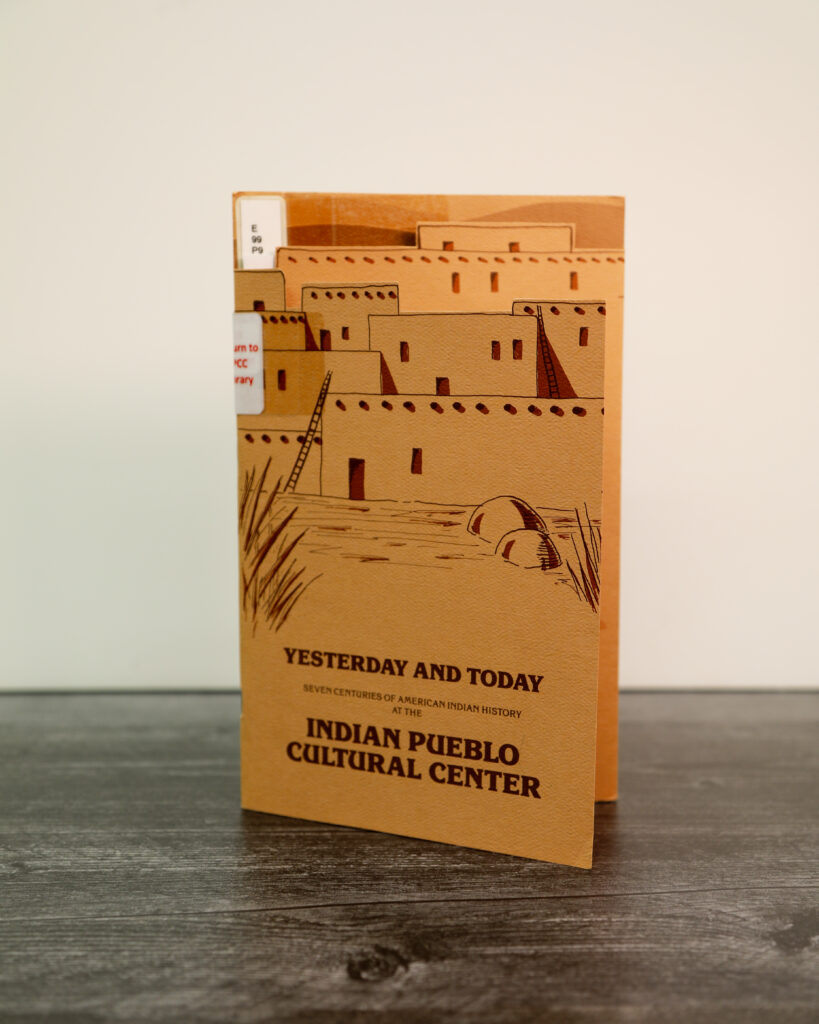
The heavyweight feel of the textured adobe brown paper of this pamphlet is luxurious; it is not, however, the first thing you notice. Rather, it’s the cover, with its striking cutaway image of a Pueblo house with hornos in the front and a ladder climbing skyward, that catches your breath. Thought to have been distributed in early 2000, this well-designed guide opens like a time capsule to reveal details about the Indian Pueblo Cultural Center of 25 years ago.
At this time, the museum was located in the lower levels of the Cultural Center. The inside folds of this guide briefly describe important features and opportunities visitors could enjoy while visiting the museum. Sections include descriptions of the exhibit gallery and archives, tours, the restaurant, impromptu traditional dances, and a 260-seat theater. A half-sheet map of the IPCC campus, originally included in the back pocket of this booklet, shows that the entirety of the ground floor was at this time dedicated to a series of stores that composed the Pueblo Gift Shop. Pottery, jewelry, traditional clothing, music, and books were just a few of the stores visitors could explore.
Most importantly though, this guide offers a powerful glimpse into one of the Indian Pueblo Cultural Center’s most meaningful founding principles: that it was created in 1976 by all 19 Pueblos of New Mexico. The booklet honors that shared foundation by giving each Pueblo its own dedicated page and recognizing the equal importance of every community represented. Each entry invites readers to learn through a brief historical background, details about the Pueblo’s size and population, and a map of New Mexico on the inside back cover that highlights the locations of all 19 Pueblos. Together, these pages create more than a visitor guide; they stand as a thoughtful tribute to Pueblo presence, identity, and collective history.
We invite you to stop by the library to take a closer look at this guide or spend some time with our collection and discover your next recommended read.