
Join us in celebrating the Indian Pueblo Cultural Center’s 50th anniversary through the stories, knowledge, and voices found in 50 special books from the IPCC Library collection. This curated selection features titles for readers of all ages and interests, offering meaningful ways to explore, honor, and celebrate Pueblo culture.
Each week, for the remainder of 2026, we will spotlight one or two featured titles. The selected books are available to view in the IPCC Library Tuesday through Saturday, 9 a.m.–5 p.m. We invite you to stop by, spend time with the collection, and discover your next recommended read.
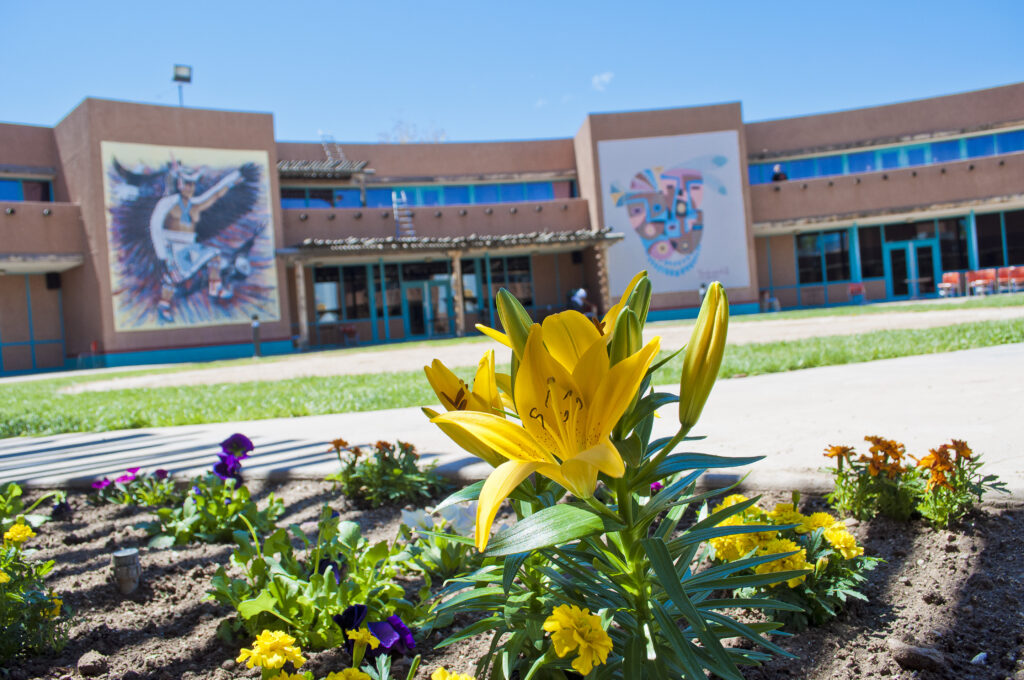
The Library at the Indian Pueblo Cultural Center is a special collection library that documents the culture and history of the 19 Pueblos of New Mexico, as well as Ysleta del Sur Pueblo in El Paso, Texas. This work supports Pueblo identity while helping secure a place for Pueblo people in the national historical narrative. It may be surprising to learn that the IPCC Library Special Collection includes many materials beyond books. A special collection library, such as the one housed on the lower level of the Indian Pueblo Cultural Center, can hold many rare, unique, and fragile items. Unlike public libraries, which often aim for a median collection age of 5 to 10 years, a special collection library has a different goal: to acquire, preserve, and provide continued access to historically valuable items.
Historically valuable items include books, but they also extend to materials such as dissertations, magazines, flyers, maps, postcards, VHS tapes, CDs, newspapers, manuscripts, and more. As we celebrate our 50th anniversary, the library would like to spend the next couple of weeks spotlighting interesting examples of paper ephemera in our collection. Ephemera comes from the Greek word ephēmeros, meaning "lasting a day." Boarding passes, ticket stubs, and, in our technology-driven world, social media posts that last only 24 hours are all examples of ephemeral objects. In the IPCC Library, items that may once have been considered minor, transient, printed or written materials meant to be used briefly, are now saved permanently as tangible representations of our history.
In 1977, the Friends of the Indian Pueblo Cultural Center, a group of dedicated volunteers who helped raise support from donors around the world, launched an ambitious mural campaign that helped make IPCC home to more than 20 murals by outstanding Pueblo artists. You can discover these murals through a guided tour, join a biweekly mural discussion, or explore the IPCC website’s virtual culture guide. But for a truly special experience, visit the IPCC Library, where the story of these murals comes to life in a unique way.
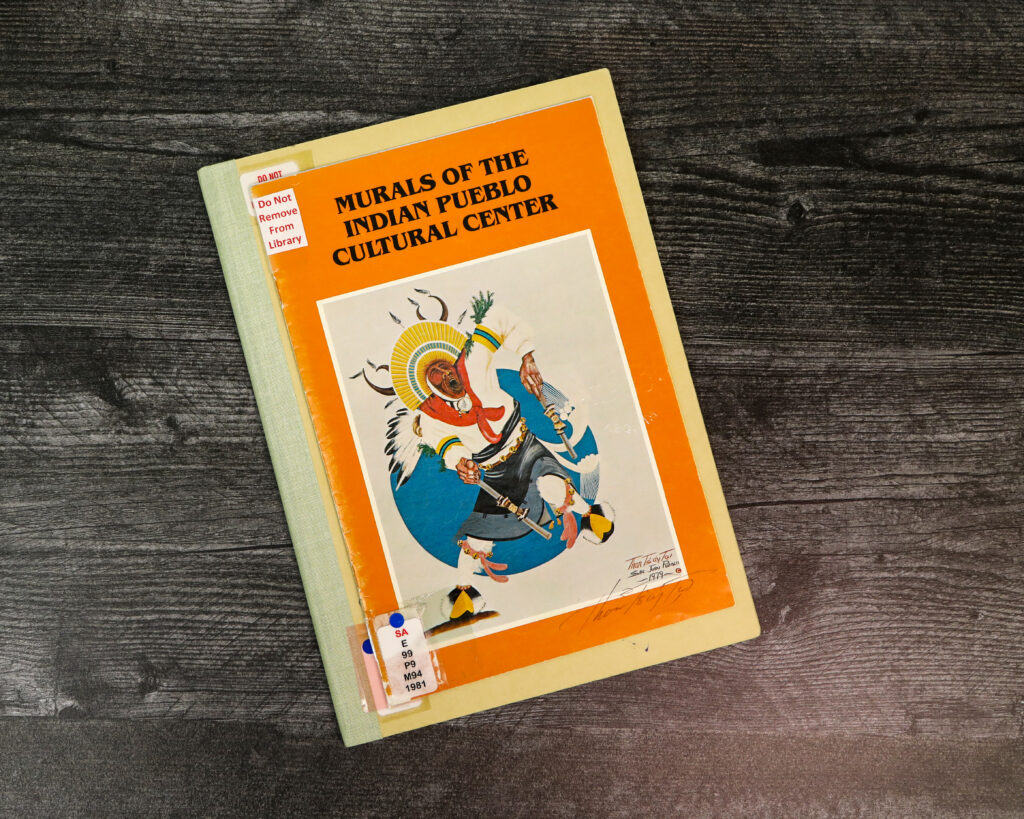
Murals of the Indian Pueblo Cultural Center
Published by the Friends of the Indian Pueblo Cultural Center
Originally published in 1981, the Murals of the Indian Pueblo Cultural Center was a full-color, multi-page booklet that featured the seven large exterior murals painted directly on the stucco walls of the enclosed courtyard plaza at IPCC as well as six murals that could be found inside the building. Each page of the booklet included a color image of a specific mural along with a paragraph that provided more details about the painting process, the subject of the mural, or its cultural significance. The last few pages of the booklet featured black and white photographs of each of the muralists along with their biographical information. The information found in this booklet continues to be readily available as a reprint in the IPCC library and can be viewed anytime Tuesday – Saturday from 9- 5 pm.
Now, let’s step deeper into the IPCC Special Collection Library to discover an item kept in Special Access: an original copy of this booklet, preserved in its entirety with one remarkable difference, each page has been signed by the muralist featured on that page. What a thrill to see the signatures of each artist and know the same hands that signed each page also created the amazing artwork we can still admire today! This is something precious, a piece of history that cannot be recreated, and so we preserve and honor it here in our library.
There are so many more stories to discover when you visit the Indian Pueblo Cultural Center and the IPCC library. Come visit us today!