
Join us in celebrating the Indian Pueblo Cultural Center’s 50th anniversary through the stories, knowledge, and voices represented in 50 special books from the IPCC Library collection. This curated selection features titles for readers of all ages and interests, offering meaningful ways to explore, honor, and celebrate Pueblo culture.
Each week, for the remainder of 2026, we will spotlight one or two featured titles. The selected books are available to view in the IPCC Library Tuesday through Saturday, 9 a.m.–5 p.m.
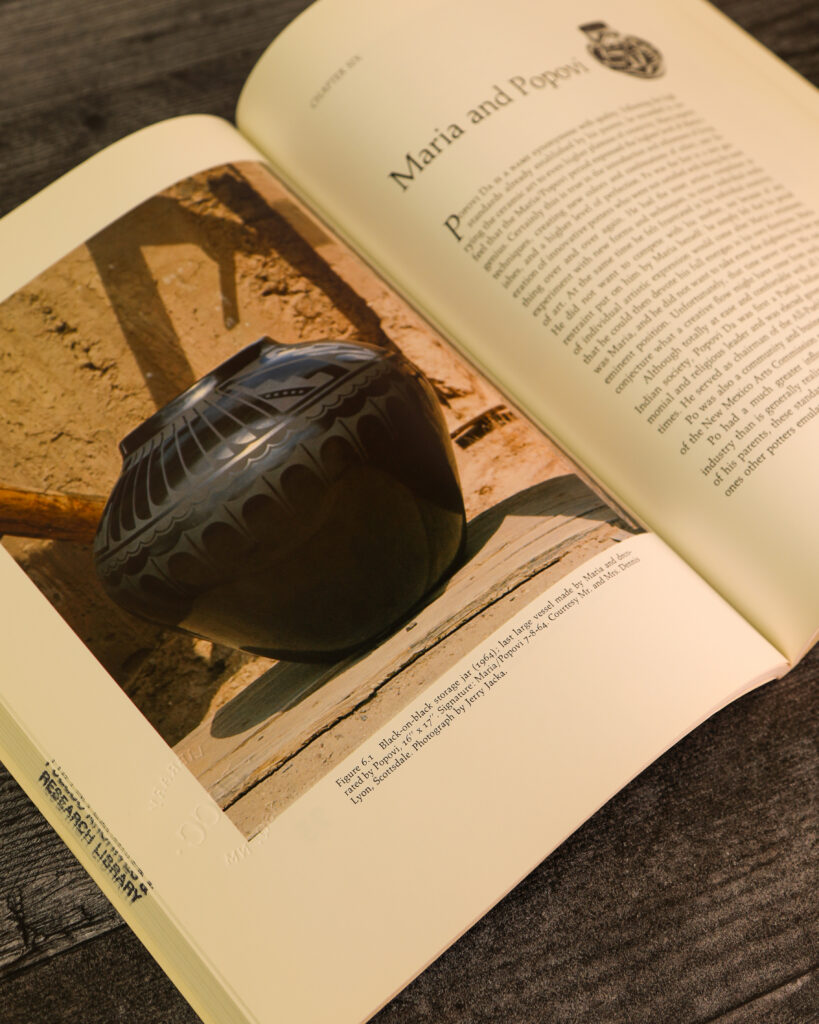
Maria
Revised and Expanded Edition
Richard L. Spivey
Northland Publishing, 1989
Maria Martinez is widely recognized as the most famous among New Mexican Pueblo potters. Maria’s story begins in the Pueblo of San Ildefonso, situated between the Jemez and Sangre de Cristo Mountains. As a child, Maria first attempted to create her own pottery by making small dishes for play. What started so simply would, in time, become a legacy known the world over.
In this book, originally written by Richard Spivey in 1979 and later expanded and revised in 1989, Maria's 70-year career and enduring legacy are presented not as a biography or a technical study of pottery making in San Ildefonso. Instead, Spivey traces the development of Maria's pottery over her lifetime and, through statements provided by Maria, offers a glimpse into who she was, what she thought about pottery making, and her perspectives on the fame and influence that followed her work.
“A man came from Germany to take a picture of my hands. Germany. He came to take a picture of me. And I was telling him why he wanted a picture taken of me. He said because too many people know you and you’ve been making pottery.” (Maria Martinez, p. 61)
The 1989 edition of this book is arranged chronologically and explores Maria’s pottery and career within the history of San Ildefonso pottery making. The added chapters on pottery traditions in Maria's family offer rich detail through the stories of her sister Clara, daughter-in-law Santana, sons Adam and Popovi Da, and grandson Tony Da. The book also discusses Maria’s addition of signatures to her pottery, along with her many awards and honors. Many full-color photographs appear throughout the book, including images of early pieces by Maria and her husband, Julian, as well as seven of Maria’s large storage jars.
The “second text” of selected quotes and conversations from interviews Spivey held with Maria in 1977 remains a valuable part of the book. These selections give readers a chance to hear from the artist herself as she reflects on her collaborations with Julian and other family members, the people who influenced her as a young woman, what it means to leave a legacy, and why she believed her knowledge should be shared so generously.
“I just thank God because it’s not only for me; it’s for all the people. I said to my God, the Great Spirit, my Mother Earth gave me this luck. So I’m not going to keep it. I take care of our people.” (p. 148)
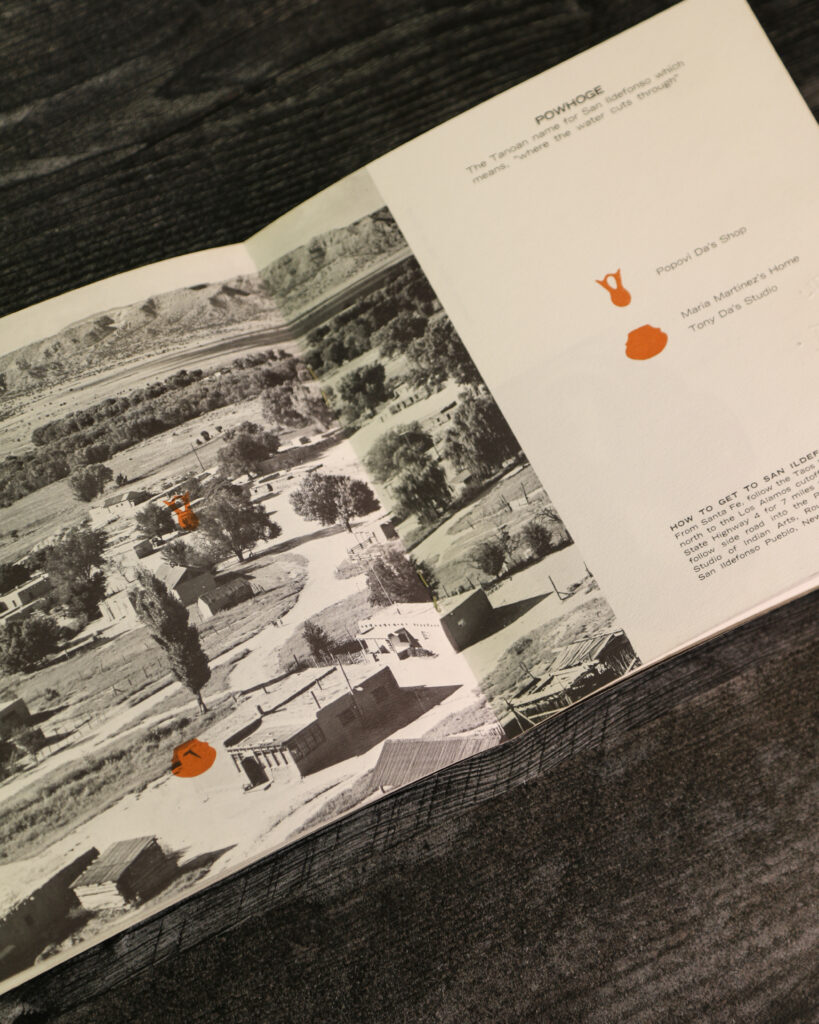
Our bonus title for this week is a wonderful exhibition guide from the 1967 show Powhoge, named after Powhoge Owingeh, the Tewa name for San Ildefonso Pueblo. Featuring the collaborative and individual work of Maria Martinez, her son Popovi Da, and her grandson Tony Da, the exhibition is also known as the Three Generations exhibit.
Presented by the Institute of American Indian Arts, the exhibit premiered in Santa Fe in April 1967 before traveling to the U.S. Department of the Interior Galleries in Washington, D.C., where it was displayed during May and June.
Featuring black-and-white photographs of selected pottery and paintings, as well as writings from Otellie Loloma (Hopi), Larry Bird (Santo Domingo-Laguna), Libby Alexander (Spokane), and Grey Cohoe (Navajo), this beautifully arranged guide inspires through both its imagery and text. Rich in artistic and cultural significance, it is truly a treasure worth exploring.
We invite you to come see us in the IPCC Library to explore these two titles, as well as the many other wonderful books we have about Maria Martinez and her family. Come discover your next favorite read in the IPCC Library!