
As part of our 50th anniversary celebrations, the library is introducing a new “50 for 50” blog series for 2026 where, by the end of the year, we will have introduced fifty titles that we recommend reading to learn about and celebrate Pueblo culture. Read ahead to learn about a selection of books in the IPCC Library collections that span genres, ages, and perspectives—and to learn about our next Pueblo Book Club pick and meeting date. Together, these titles invite all of us to engage more thoughtfully with Pueblo cultures through stories rooted in history, art, food, and lived experience.
Winter is a time for storytelling—a time to gather, to listen, and to share knowledge that has been carried across generations. As we celebrate the Indian Pueblo Cultural Center’s 50th anniversary, we find ourselves reflecting deeply on how stories are shared, who tells them, and how listening can bring us closer to one another.
This year especially, we are thinking about storytelling as an act of community care. For 50 years, the IPCC has been a place where stories are honored, protected, and shared with intention. These winter reading picks reflect that commitment. Each book offers a different way of listening—and reminds us that stories carry meaning, memory, and responsibility.
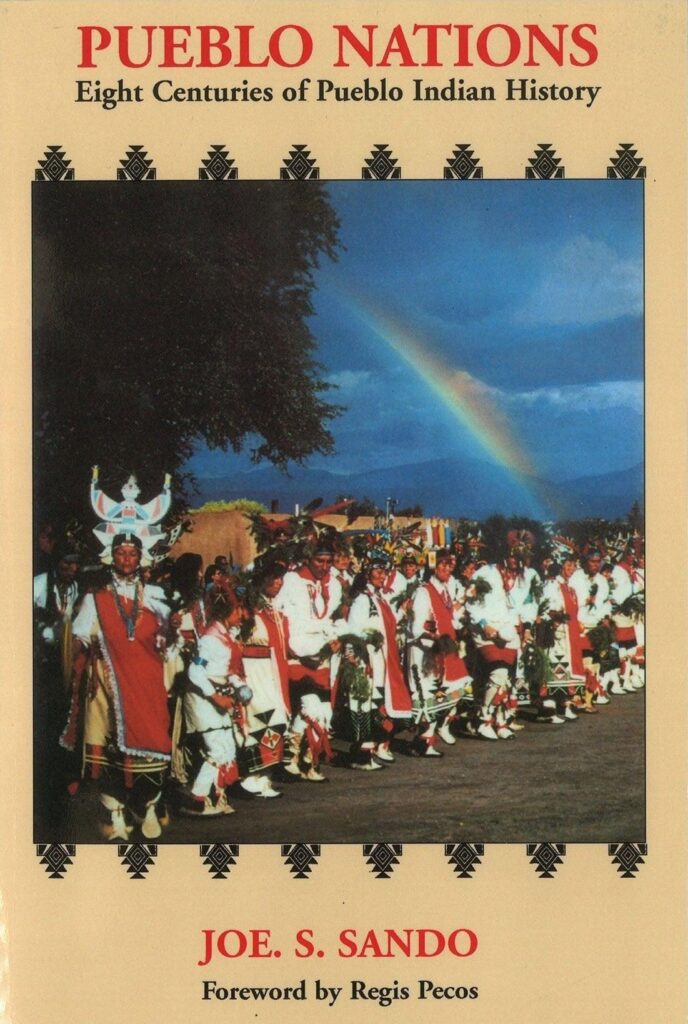
Pueblo Nations: Eight Centuries of Pueblo Indian History
Joe Sando (Jemez Pueblo), 1998
Kicking things off with Joe Sando who was not only one of the most prolific writers of Pueblo history but the founder of the IPCC Library, Eight Centuries of Pueblo Indian History describes the histories of each of the 19 Pueblos from early histories through the 20th century, as well as profiles of important Pueblo leaders.
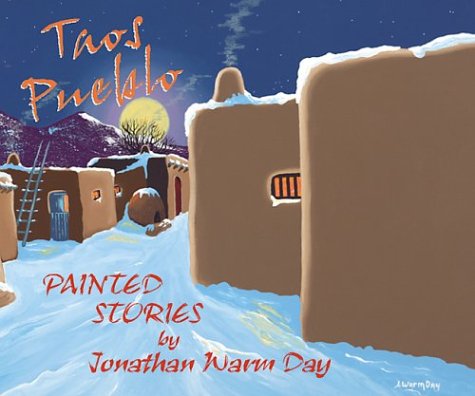
Taos Pueblo: Painted Stories
Jonathan Warm Day (Taos Pueblo), 2004
In a beautifully illustrated book, paintings become stories. Jonathan Warm Day shares scenes of Taos Pueblo traditional life across the four seasons that invite readers to slow down, observe, and reflect on how visual storytelling preserves community knowledge.
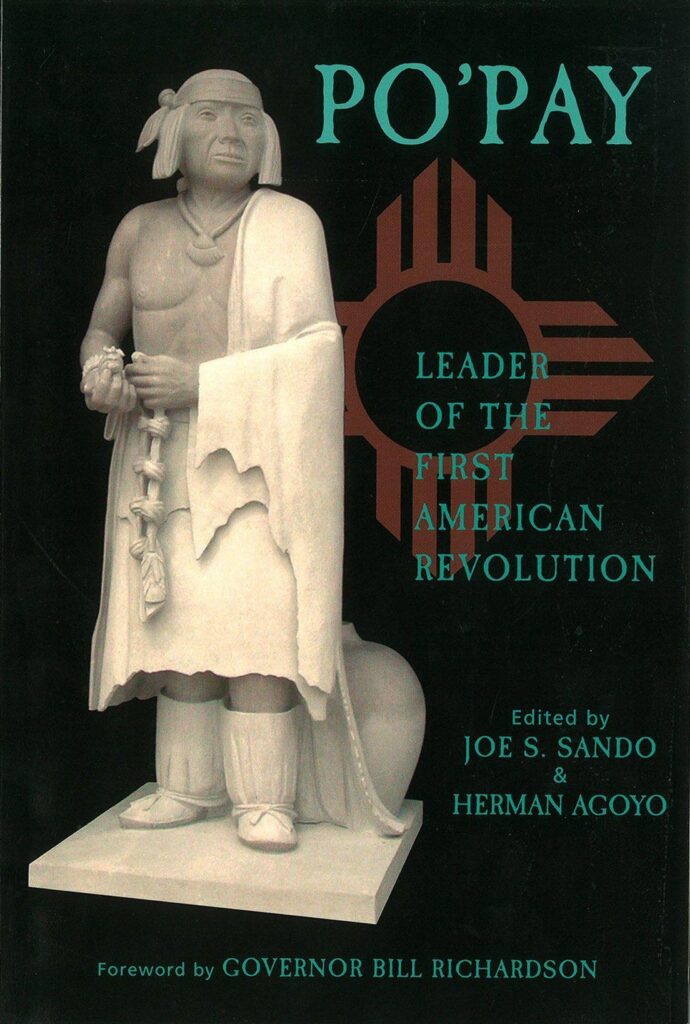
Po’Pay: Leader of the First American Revolution
Joe Sando (Jemez Pueblo) and Herman Agoyo (Ohkay Owingeh), 2005
This accessible biography introduces readers to Po’Pay and his legacy. Drawing on oral storytelling and early Spanish colonial records, this book serves as both a fantastic introduction to the Pueblo Revolt of 1680 and a deep dive into the leader himself.
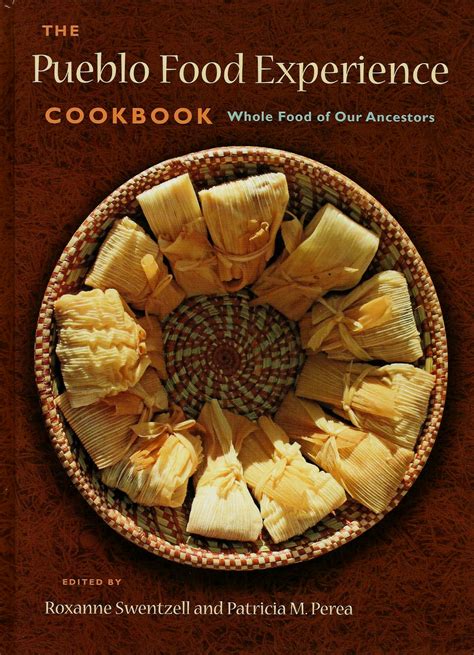
The Pueblo Food Experience Cookbook: Whole Foods of Our Ancestors
Roxanne Swentzell (Santa Clara Pueblo) and Patricia M. Perea, 2016
Food is one of the most intimate ways stories are shared. This book blends Tewa foodways with reflections on land, health, and tradition, reminding us that meals connect us to our ancestors and to one another. Coming out of the Flowering Tree Permaculture Institute at Santa Clara Pueblo, it draws together essays and recipes to create a wholistic picture of history, culture, and community health.
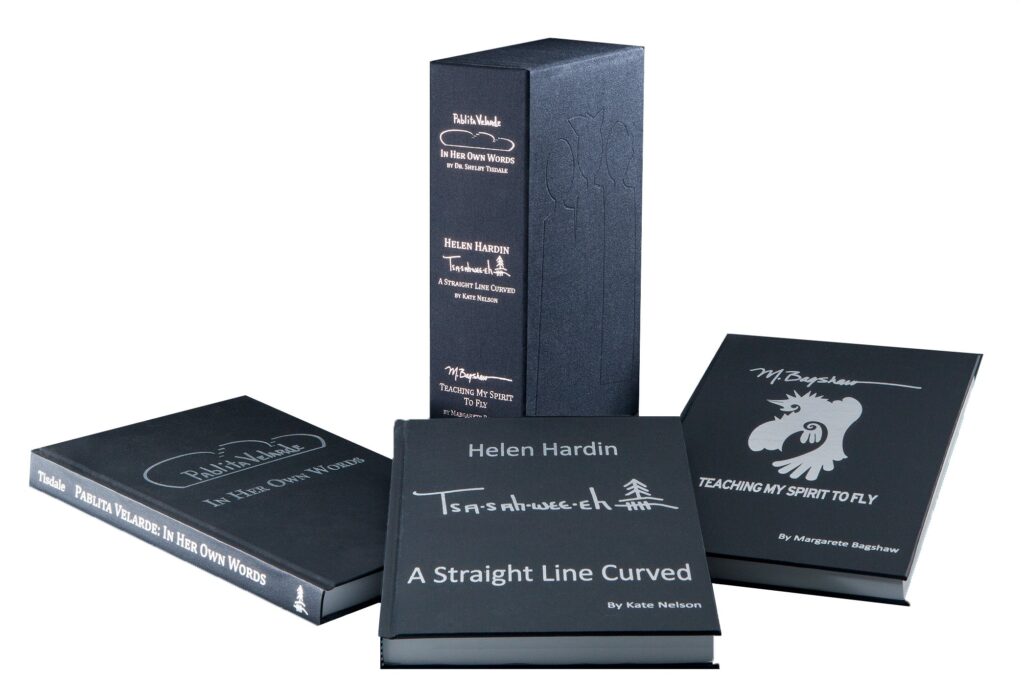
Pablita Velarde: In Her Own Words; Helen Hardin: A Straight Line Curved; Margarete Bagshaw: Teaching My Spirit to Fly
Shelby Tisdale; Kate Nelson; Margarete Bagshaw, 2012
This next pick is technically not one book; it’s three. It’s a boxed set of writings from three generations of Santa Clara artists. The lives and paintings of grandmother, mother, and granddaughter are explored in-depth alongside beautiful reproductions of their words. Read together, they teach us not only the biographies of these three individual women, but how their stories and art influence one another across generations.
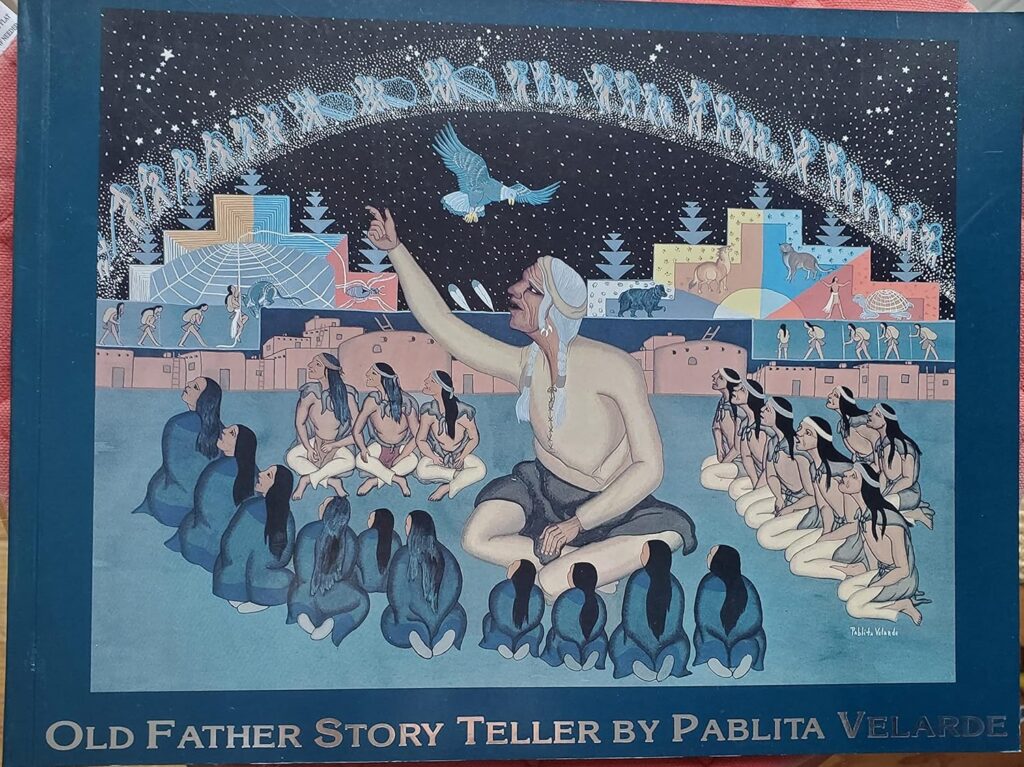
Old Father: The Story Teller
Pablita Velarde/Tse Tsan (Santa Clara Pueblo), 1989
Written for children but meaningful for all ages, this picture book written by painter Pablita Velarde retells six Tewa stories, collecting, preserving, and giving her own reflection on tradition. Showcasing Pablita’s familiar painting style, the stories show her effort to treasure the stories shared with her by her grandfathers by sharing them with both her children and readers like us.
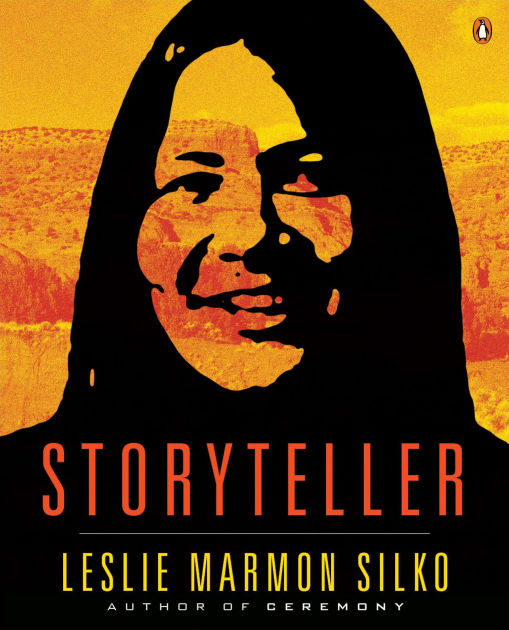
Storyteller
Leslie Marmon Silko (Laguna Pueblo), 1981
Leslie Marmon Silko’s classic work blends poetry, photographs, and prose to reflect the layered, nonlinear nature of Indigenous storytelling. Across various stories, she invites readers to listen in a different way—one that values memory, place, and silence.
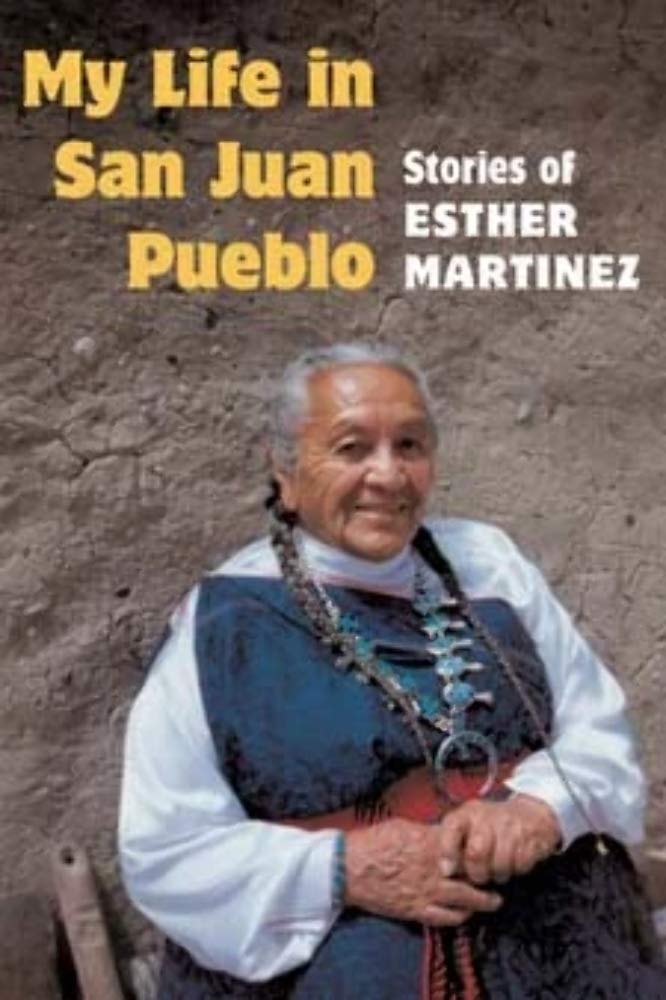
My Life in San Juan Pueblo: Stories of Esther Martinez
Esther Martinez (Ohkay Owingeh), 2004
Master storyteller Esther Martinez shares her life story and stories of her culture in this autobiographical narrative. Her memories remind us that personal stories are also community stories, carrying teachings that extend far beyond one lifetime.
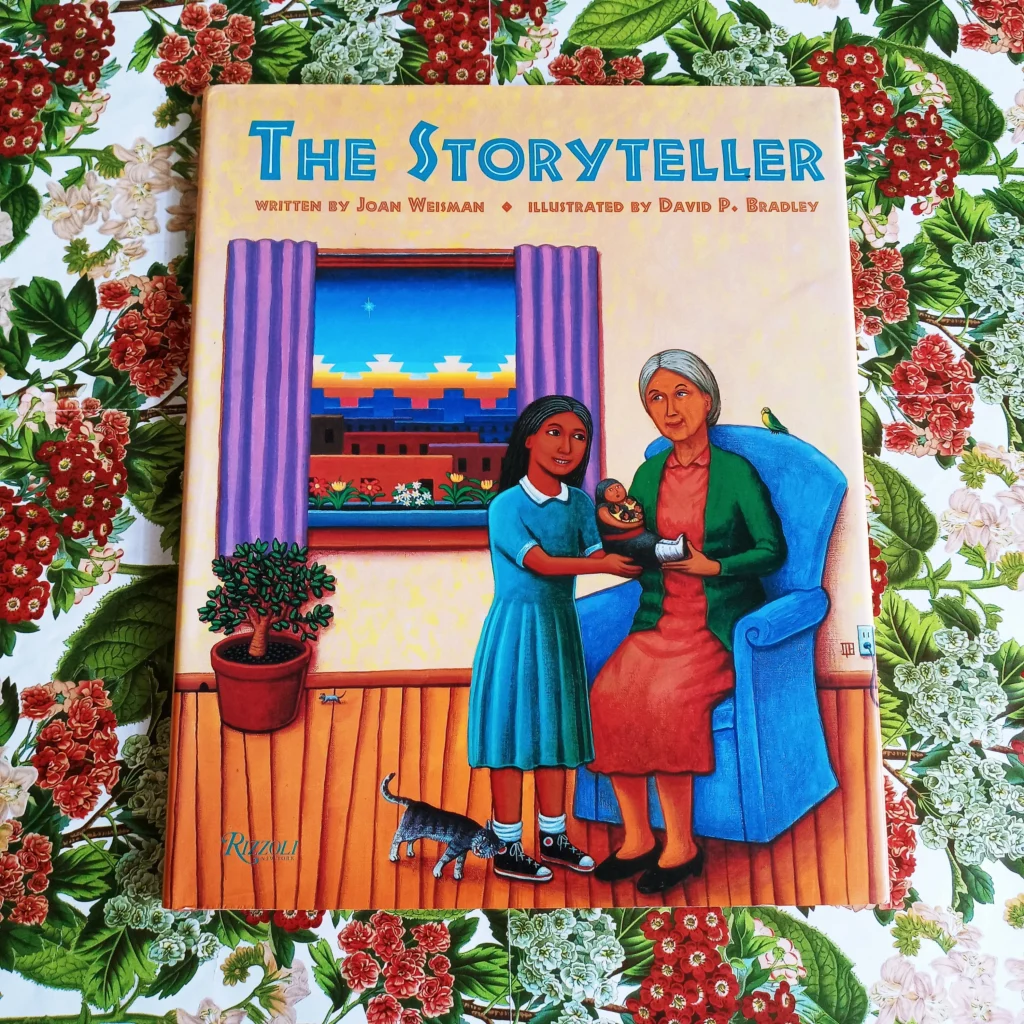
The Storyteller
Joan Weisman, illustrated by David P. Bradley (Chippewa), 1993
This picture book for young readers tells the story of nine-year-old Rama, who develops a friendship with a lonely older woman named Miss Lottie after moving to the city from Cochiti Pueblo. The two begin to exchange gifts, including a Cochiti storyteller figurine. The Storyteller is a popular book for our Family Story Time. It is a wonderful reflection on sharing stories with others and connecting with tradition across space and time.
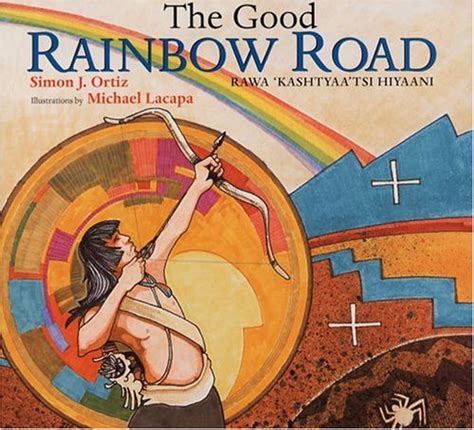
The Good Rainbow Road (Rawa ‘Kashtyaa’tsi Hiyaani)
Simon J. Ortiz (Acoma), illustrated by Michael LaCapa (Hopi, Tewa, and Apache descent), 2004
Written for young readers, this story by Acoma poet Simon Ortiz shares lessons about respect, balance, and community responsibility through a tale of two brothers who save their home. Written in side-by-side English and Keres with a Spanish translation in an appendix, this story brings together language, tradition, and memory.
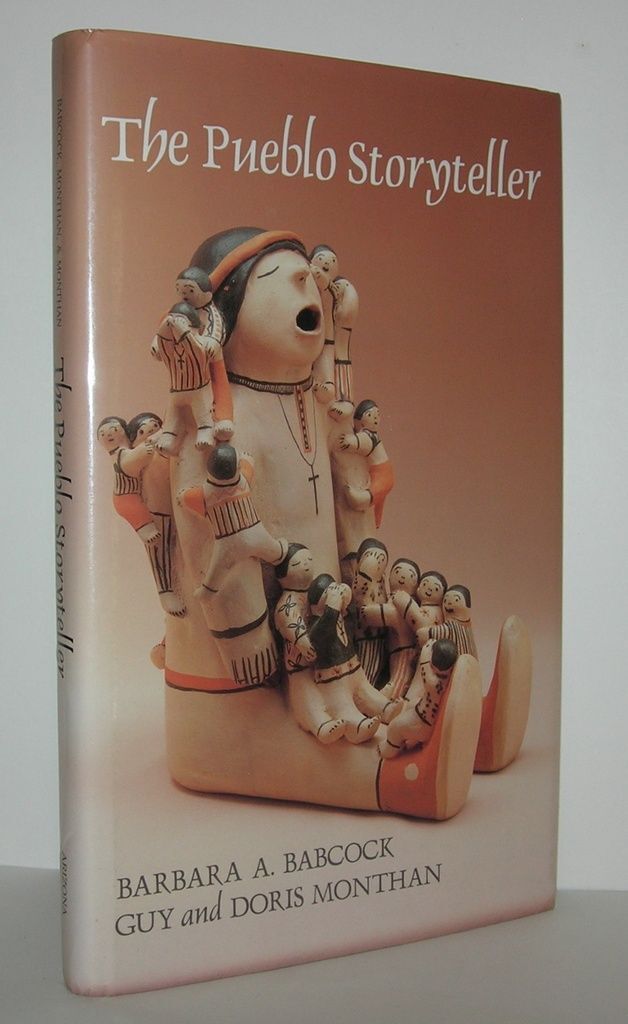
The Pueblo Storyteller: Development of a Figurative Ceramic Tradition
Barbara Babcock, Guy Monthan, and Doris Monthan, 1988
This compendium explores the role of the storyteller figurine within Pueblo communities, from Helen Cordero’s Cochiti storytellers and beyond. Including background on the development of the storytellers as well as descriptions of contemporary storyteller sculptors, it serves as a great introduction to the tradition of storyteller figurines and teaches us to contemplate the relationship between stories, traditions, and the ways we value and share them.
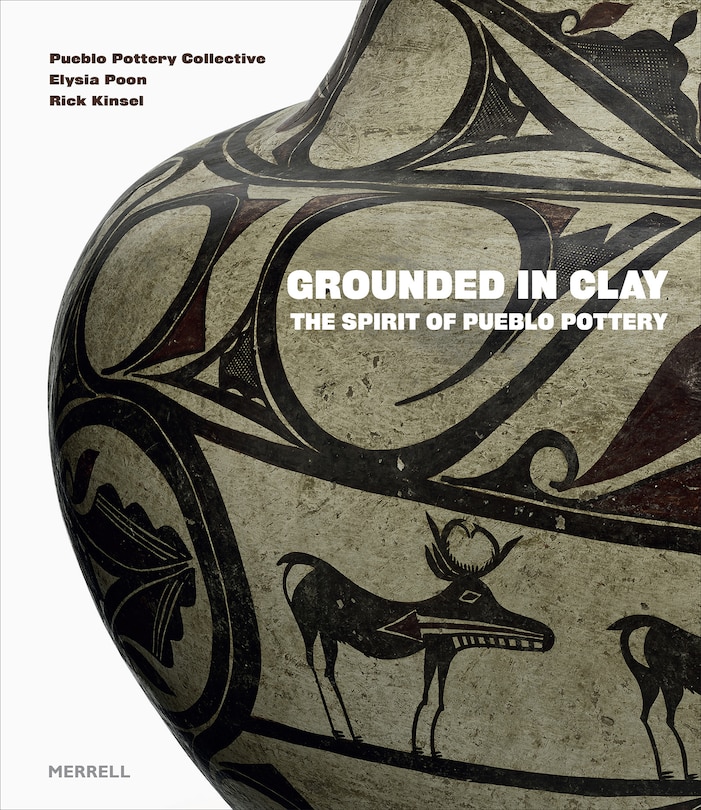
Grounded in Clay: The Spirit of Pueblo Pottery
Pueblo Pottery Collective, 2025
We close with our upcoming Book Club pick: the exhibition catalog for Pueblo Pottery Collective’s Grounded in Clay, which opens at the Indian Pueblo Cultural Center in March. More than your typical catalog, this beautifully published book brings together Pueblo potters’ voices to share of their work, reflecting on land, culture, innovation, and care—and invites readers into an ongoing conversation about what pottery teaches us.
On March 11, 2026 at 5PM MT, join us for a virtual discussion of the book the week of the exhibit opening! Registration information can be found here.
As we mark fifty years, we invite you to read alongside us, reflect with us, and engage with these stories in meaningful ways. Whether you join our Book Club, share a favorite passage, or simply spend time listening, your presence is part of how these stories continue.
Grounded in Clay and the other books included in this list are available to read in the IPCC Library, currently open Tuesday-Saturday 9AM-4PM. Register for the book club here and keep an eye on the Indian Pueblo Store where you will be able to purchase the book club book online and in-store soon!
Stay tuned for another blog post in the spring that focuses on Pueblo pottery following the opening of Grounded in Clay in March.