
April 9, 2025—Albuquerque, NM—The University of New Mexico School of Architecture + Planning (SA+P) Indigenous Design + Planning Institute (iD+Pi) is pleased to announce the Grand Opening weekend of their new exhibition at the Indian Pueblo Cultural Center (IPCC) Museum entitled Restorying Our HeartPlaces: Contemporary Pueblo Architecture.
The co-curators of the exhibition are Theodore (Ted) Jojola, Ph.D. (Pueblo of Isleta), UNM Distinguished Professor/Regents’ Professor, and Lynn Paxson, Ph.D., Iowa State University Emerita Professor of Architecture. The exhibition opened on March 25 and is on view through Dec. 7, 2025 in the IPCC Museum’s newly renovated South Gallery.
Restorying Our HeartPlaces: Contemporary Pueblo Architecture focuses on a near-present history of the architectural sovereignty that emerged after the 1975 Indian Self- Determination Act. It showcases the work of Pueblo customary and professional architects and designers while representing design concepts from regional ancestral sites that influence 20th and 21st century Pueblo architecture. The exhibition features an immersive experience of the Pueblo of Acoma’s Sky City Cultural Center.
The exhibition is supported by several grants. iD+Pi garnered funding from the Chamiza Foundation, the iD+Pi’s Frontier Endowment, and UNM School of Architecture + Planning. The IPCC received funding from the New Mexico Humanities Council, Noon Whistle Fund, and First Nations Development Institute.
According to co-curators Ted Jojola and Lynn Paxson, “We seek to go deeper, telling the stories of the places and how and why they came to be and their use in Pueblo communities. It is important for upcoming young Indigenous people to see this work as necessary for exercising the sovereignty of their communities.”
A Press Walkthrough will be held on Friday, April 11 at 12pm and 1pm or by request. If possible, please RSVP to Michelle Lanteri, IPCC Museum Head Curator, at mlanteri@indianpueblo.org.
Learn more about the exhibit at https://indianpueblo.org/current_exhibitions/unm-ipcc- present-pueblo-architecture/
The Grand Opening weekend programs are as follows:
• April 12 | 5-8 PM (Chaco 1 & 2) free event with refreshments With a 6-7 PM “Grand Opening Reception Program,” remarks by co-curators Ted Jojola, Ph.D. & Dr. Lynn Paxson, featuring keynote speaker Dr. Cynthia Chavez Lamar (San Felipe Pueblo/Hopi/Tewa/Diné) with an introduction by Duane Blue Spruce (Pueblo of Laguna/Ohkay Owingeh)
• April 13 | 11 AM-1 PM (Chaco 1) included with museum admission "Meet the Architects & Designers: Pueblo Architecture Today - Indigenous Communities: The Utilization of Stories" speaker panel featuring Dr. Cynthia Chavez Lamar & Duane Blue Spruce, followed by an exhibition tour with the curators. This speaker series is supported by the New Mexico Humanities Council.
About the Speakers:
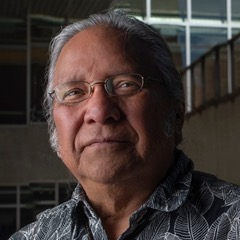
Theodore (Ted) Jojola, Ph.D. is a Distinguished Professor and Regents’ Professor in the Community & Regional Planning Program, School of Architecture + Planning, University of New Mexico (UNM). He holds a Ph.D. in Political Science from University of Hawaii at Manoa where he attended the East-West Center. He has a Masters in City Planning from the Massachusetts Institute of Technology, and a BFA in Architecture from UNM. Dr. Jojola is an enrolled tribal member of the Pueblo of Isleta. He is the founder of the Indigenous Design + Planning Institute at UNM and a cofounder of the Indigenous Planning Division of the American Planning Association.
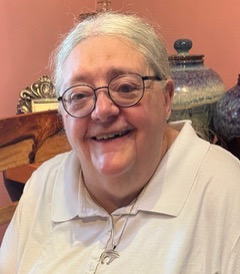
Lynn Paxson, Ph.D. is an Emerita Professor of Architecture at Iowa State University. She holds degrees in both design and social science and is interested in architecture and design as cultural phenomena. She introduced the History of Native American Architecture class and has taught a number of studios related to Indigenous projects and issues. A member of the American Indian Council of Architects and Engineers (AICAE), Dr. Paxson has been recognized by the ACSA (American Collegiate Schools of Architecture) for her work in diversifying the architecture curriculum through Native cultures and issues.
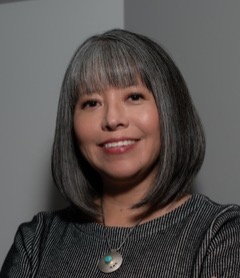
Dr. Cynthia Chavez Lamar was appointed to be the third Director of the Smithsonian's National Museum of the American Indian (NMAI) in 2022. She has a long history of working with the NMAI in a variety of capacities from intern to associate curator to director for collections and operations and worked as the lead curator for one of the major inaugural exhibits "Our Lives." She is a leading force among Indigenous people who are museum professionals. She is passionate about leveraging the museum's reputation to support shared initiatives with Indigenous people and communities regarding the care and stories of museum collections, as well as increasing access to museum collections.
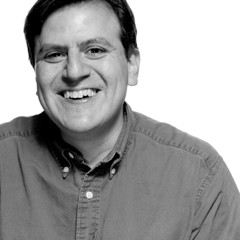
Duane Blue Spruce worked as a project manager at the Institute of American Indian Arts until 1994 when he began working at the Smithsonian's National Museum of the American Indian (NMAI) in Washington, D.C. as the primary liaison and project coordinator between the museum and the architectural design and construction team. He worked in Washington, D.C. at the NMAI for over a decade and then returned to New York City to help with the portion of the NMAI that remained there –the NMAI's George Gustav Heye Center–where he still works as a major exhibition designer, coordinator, and educator.
###
About the Indigenous Design + Planning Institute (iD+Pi): The Indigenous Design + Planning Institute is an initiative of the School of Architecture + Planning, University of New Mexico. iD+Pi was created in the Fall of 2011. Its goal is to educate and inform Indigenous design and planning by engaging faculty, students, professionals, and community leaders in culturally responsive practices. Its three principal areas of activity are academic, professional, and tribal. iD+Pi works in an interdisciplinary fashion with the three major programs in the School of Architecture + Planning by providing a learning environment for students, faculty, and professionals. Its activities serve to inform Indigenous design and planning practices. To learn more, please visit Indigenous Design + Planning Institute | The University of New Mexico.